
How to Appeal a Denied Insurance Claim
By MedicureMD Billing Team. Reviewed by an AAPC-certified coder.
A denied claim is not the end. Many denials can be fixed, and a well-prepared appeal can get the claim paid. This guide explains how to appeal a denied insurance claim in 7 steps, from reading the denial to following up with the payer. It is written for medical practices, and patients can use the same steps for their own claims.
Before You Appeal: Know Why the Claim Was Denied
Every denial comes with a reason. You will find it on the explanation of benefits (EOB) or the electronic remittance advice (ERA), usually as a code and a short description. A common one is CO-45. Common reasons include:
- Missing or wrong patient or insurance information
- Service not covered, or not medically necessary according to the payer
- Prior authorization missing
- Coding errors or missing modifiers
- Duplicate claim
- Claim filed after the deadline (see our guide to timely filing for Aetna)
Knowing the reason tells you how to appeal a denied insurance claim, or whether you only need to correct it. Some denials need only a corrected claim. Others need a formal appeal.
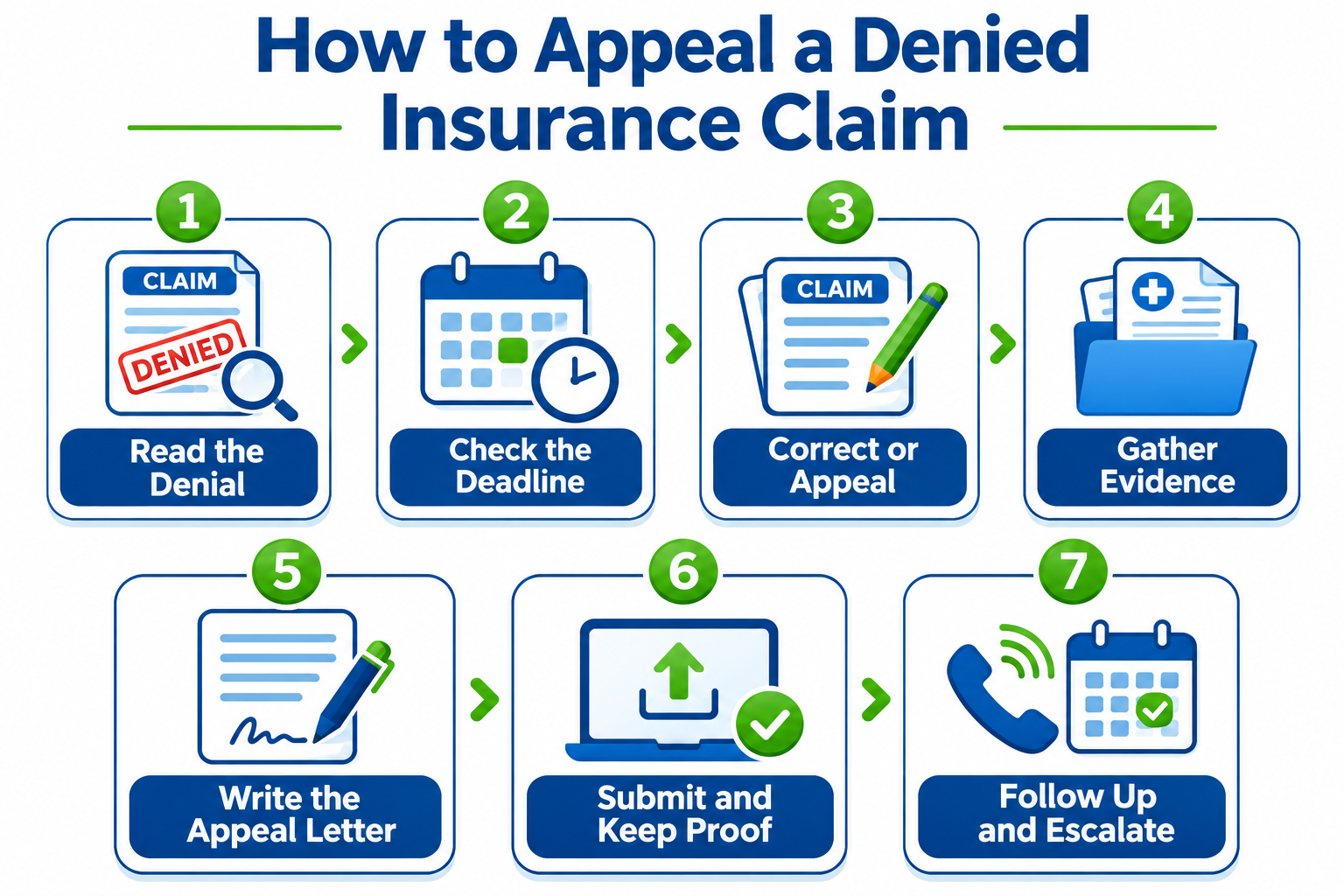
How to Appeal a Denied Insurance Claim: 7 Steps
1. Read the denial carefully
Find the denial code, the reason and the appeal instructions on the EOB or ERA. Write down the claim number, date of service and the payer’s contact details.
2. Check the deadline
Every payer sets a deadline for appeals, and it differs by payer and plan. Check your contract or the denial letter right away. A late appeal is usually rejected, even if it is correct.
3. Decide: correct the claim or appeal
If the denial is caused by a data error (wrong ID, missing modifier, typo), fix it and send a corrected claim. If you disagree with the payer’s decision, such as medical necessity or coverage, file a formal appeal.
4. Gather your evidence
Collect the medical records, visit notes, prior authorization, correct codes and any payer policy that supports your case. Clear documentation is the strongest part of an appeal.
5. Write the appeal letter
Keep it short and specific. State the patient and claim details, the reason for denial, why the denial is wrong and what you want the payer to do. A simple outline is below.
6. Submit and keep proof
Send the appeal through the payer’s portal or the method it requires, and keep a copy and a confirmation. Submit before the deadline.
7. Follow up and escalate
Check the status regularly. If the appeal is denied, ask about a second-level appeal, a peer-to-peer review or an external review. Patients can also read the steps on HealthCare.gov.
Appeal Letter Outline
When you appeal a denied insurance claim, use this outline as a starting point and change the details for each claim:
- Header: payer name, date, patient name, member ID, claim number, date of service
- Request: “We are asking you to review and overturn the denial of this claim.”
- Reason for denial: the exact denial code and reason from the EOB or ERA
- Why it is wrong: a short explanation with references to the attached records and policy
- Attachments: medical records, authorization, corrected codes
- Contact: name and phone number of the person handling the appeal
Why Claims Get Denied Again After an Appeal
- The appeal was sent after the deadline
- The records did not support the service billed
- The letter did not answer the specific reason for denial
- The same coding or data error was repeated
- Nobody followed up with the payer
Even when you know how to appeal a denied insurance claim, many practices do not have the time to work every denial. That is why denied claims often stay unpaid. Following up on old claims also lowers your days in accounts receivable, which is a key number in the whole revenue cycle.
Let a Billing Team Handle Your Appeals
MedicureMD is a U.S.-based team of AAPC-certified coders and billers serving 500+ physicians across 30+ specialties. Our denial management services find the reason for each denial, fix the claim or file the appeal and follow up until it is resolved. You get a report every week, with no long-term contract, only 30 days notice. Start with a free billing audit and get a written report within 24 to 48 hours.
Frequently Asked Questions About How to Appeal a Denied Insurance Claim
How do I appeal a denied insurance claim?
Read the denial reason, check the deadline, decide whether to correct the claim or appeal, gather your records, write a clear appeal letter, submit it with proof and follow up with the payer.
How long do I have to appeal a denied claim?
It depends on the payer and the plan. The deadline is usually in the denial letter or your contract, so check it as soon as you get the denial.
What is the difference between a corrected claim and an appeal?
A corrected claim fixes a data or coding error and is sent again. An appeal asks the payer to change its decision, for example on medical necessity or coverage.
What should be included in an appeal letter?
The patient and claim details, the denial reason, why the denial is wrong, supporting records and a clear request to overturn the decision.
Can a billing company handle appeals for me?
Yes. A billing team can review each denial, prepare the documents, file the appeal before the deadline and follow up with the payer.