What is the Best Medical Billing Software for Small Business
For small healthcare practices, managing billing efficiently is essential to ensure timely payments, reduce errors, and maintain smooth cash flow. Choosing the right medical billing software for small business can streamline administrative tasks, improve revenue cycles, and free up time for patient care. With the increasing demand for digital solutions, selecting software that is reliable, user-friendly, and compliant with federal regulations is crucial. Many small practices in the USA are turning to automated solutions that combine billing, invoicing, and reporting, making the process faster and more accurate.
Using robust medical invoicing software also ensures accurate tracking of claims, reduces paperwork, and enhances communication with patients and insurance providers. The right system allows practices to handle multiple payers, manage patient balances, and access detailed reports that help with financial planning. For practices seeking expert guidance or support, professional services can provide assistance to implement and optimize the software efficiently. For inquiries and further assistance, you can reach out through MedicureMD Contact.
Why Small Businesses Need Medical Billing Software
Small medical practices face unique challenges compared to larger hospitals. Limited staff, high administrative workload, and complex billing requirements make it difficult to manage claims efficiently. Medical billing software for small business helps reduce human errors, speed up reimbursement, and maintain accurate financial records. Automated systems can handle claim submissions, patient invoicing, and follow-ups on denials or pending payments. This reduces the risk of lost revenue and ensures compliance with insurance and federal regulations.
Another advantage is time efficiency. Billing software allows staff to focus more on patient care and less on administrative tasks. It provides real-time tracking of claims and payments, which is essential for practices that operate with tight budgets. With integrated dashboards, managers can view outstanding invoices, monitor revenue trends, and make informed financial decisions. This level of insight is crucial for small practices looking to grow sustainably.
Key Features to Look for in Medical Billing Software for Small Business
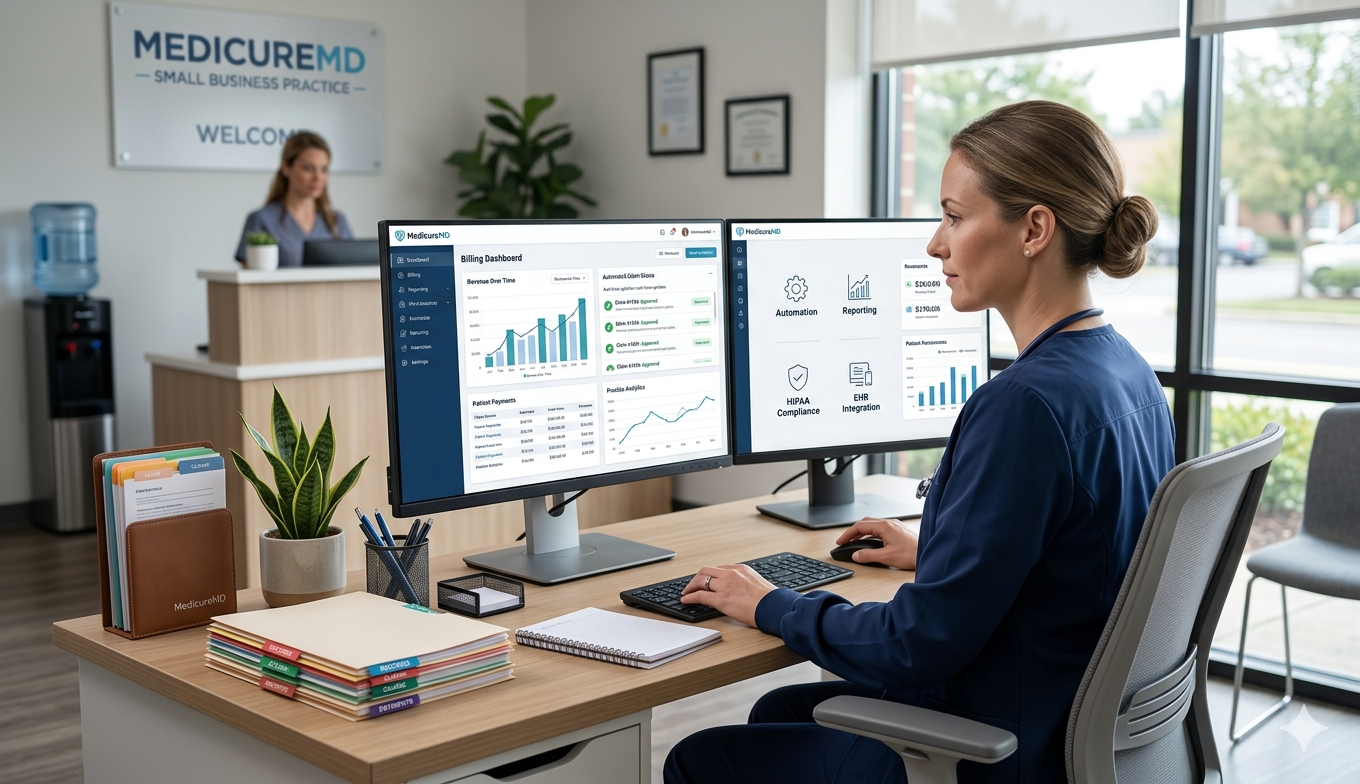
When evaluating medical billing software for small business, small practices should consider several critical features.
1. User-Friendly Interface
Software should be intuitive and easy to navigate, requiring minimal training. A simple interface ensures staff can manage billing, invoicing, and reports without delays.
2. Compliance and Security
The software must comply with HIPAA regulations, maintain secure storage of patient data, and regularly update to meet changing healthcare standards.
3. Claim Management and Automation
Automated claim submissions and error detection reduce denials and speed up reimbursement. Integrated workflow management simplifies patient billing and follow-ups.
4. Reporting and Analytics
Comprehensive dashboards provide real-time insights into revenue, claim status, and patient payments, allowing managers to make strategic decisions.
5. Integration with EHR Systems
Seamless integration with electronic health records ensures accurate data transfer and reduces manual entry errors. This is critical for maintaining efficiency and accuracy in small practices.
Top Medical Billing Software Options for Small Business
Several software solutions are designed to meet the unique needs of small healthcare practices. Some top options include cloud-based platforms that combine billing, invoicing, and reporting features, making them accessible from anywhere. These systems often offer customizable templates for invoices, automated claim submissions, and analytics tools to track performance. By choosing a platform suited to the practice’s size and specialty, small businesses can optimize revenue cycles, reduce errors, and improve patient satisfaction.
When selecting software, consider the scalability and support offered by the provider. Small practices may initially need basic billing features, but as the practice grows, the software should accommodate increased claim volume and advanced analytics. Providers that offer strong customer support, training resources, and regular updates provide added value for small businesses looking to improve efficiency.
How Medical Invoicing Software Enhances Efficiency
Medical invoicing software simplifies the billing process by generating accurate invoices, tracking patient balances, and automating reminders. This minimizes late payments, reduces administrative workload, and ensures consistent revenue flow. Advanced invoicing systems can also manage multiple insurance providers, detect coding errors, and provide detailed reporting for each claim.
By integrating invoicing with medical billing services, practices can maintain accurate records while improving operational efficiency. Automated systems allow staff to focus on patient care rather than manual data entry and claim management. For small business owners, this means less stress, fewer errors, and faster access to revenue.
Benefits of Using Medical Billing Software for Small Business
Adopting specialized medical billing software for small business offers several advantages. It reduces administrative costs by minimizing manual work and streamlining workflow. Accurate coding and automated claim submissions reduce the risk of denials and speed up reimbursements. Practices also gain access to reporting tools that provide insights into financial performance, helping managers make informed decisions. Scalability is another benefit, as software can grow with the practice, handling increasing patient volumes and complex claims.
Compliance and data security are additional advantages. Reliable software ensures HIPAA compliance, protects sensitive patient information, and reduces the risk of penalties. By combining automation, analytics, and secure data management, small practices can operate more efficiently while focusing on high-quality patient care.
Frequently Asked Questions (FAQs)
Q1: What is the best medical billing software for small business?
The best software combines ease of use, automation, compliance, and reporting features. Cloud-based solutions with integrated invoicing are ideal for small practices.
Q2: How does medical invoicing software help small practices?
It automates invoice generation, tracks payments, reduces errors, and improves cash flow, allowing staff to focus on patient care.
Q3: Can small businesses handle billing without software?
While possible, manual billing is time-consuming and error-prone. Software increases accuracy, efficiency, and ensures compliance with regulations.
Q4: Is medical billing software expensive for small businesses?
Many options are affordable, with scalable plans based on practice size and claim volume. Cost savings from reduced errors and faster reimbursement often outweigh subscription fees.
Q5: Can medical billing software integrate with my EHR system?
Yes, most modern solutions integrate seamlessly with EHR systems to ensure accurate data transfer and reduce manual entry errors.
Q6: How do I get started with medical billing software?
Identify your practice’s needs, select a software provider, set up patient and insurance data, and provide staff training for smooth adoption.
By investing in the right medical billing software for small business, practices can improve operational efficiency, reduce errors, enhance patient satisfaction, and maintain a healthy cash flow. Utilizing medical invoicing software alongside billing services ensures a streamlined revenue cycle and scalable growth. For expert guidance or support in selecting and implementing the right system, small practices can contact professionals through MedicureMD Contact.
FAQs
What is the best medical billing software for a small business?
The best software for a small practice is one that combines an intuitive, user-friendly interface with automated claim submission, strict HIPAA compliance, and robust reporting tools. Cloud-based solutions that offer integrated medical invoicing software are highly recommended because they allow small teams to securely manage billing from anywhere.
How does medical invoicing software improve practice efficiency?
Medical invoicing software automates the generation of patient bills, tracks outstanding balances, and sends automated payment reminders. This significantly minimizes late patient payments, reduces the administrative workload on limited front-desk staff, and ensures a consistent cash flow for the practice.
Can a small healthcare business handle medical billing without software?
While it is technically possible to handle billing manually using spreadsheets or paper forms, it is highly time-consuming, inefficient, and prone to costly human errors. Utilizing specialized billing software ensures accuracy, speeds up your insurance reimbursements, and automatically keeps the practice compliant with federal regulations.
Is medical billing software expensive for a small practice?
Many modern software providers offer affordable, tiered pricing plans specifically tailored to small businesses. These scalable models are usually based on your practice size or monthly claim volume. Ultimately, the cost savings gained from reduced claim denials and faster reimbursements often far outweigh the monthly subscription fees.
Can medical billing software integrate directly with my current EHR system?
Yes, most top-tier billing and invoicing platforms are built to integrate seamlessly with Electronic Health Record (EHR) systems. This integration ensures that clinical data transfers automatically into billable data, which drastically reduces manual data entry errors and streamlines your overall workflow.
What key security standards must small business billing software meet?
Any medical billing software you implement must be fully compliant with HIPAA regulations to protect sensitive patient data. It should feature secure, encrypted data storage, multi-factor user authentication, and receive regular updates from the vendor to comply with evolving healthcare data security standards in the USA.