
Revenue Cycle Management Services: A Practical Guide for U.S. Healthcare Providers

A medical practice can deliver excellent care and still struggle financially when claims leave the office with missing data, payer rules go unchecked, or denials sit in an aging queue. Revenue cycle management services problems rarely begin with one dramatic failure. They usually grow through small gaps at scheduling, eligibility, documentation, coding, authorization, claim submission, and follow-up.

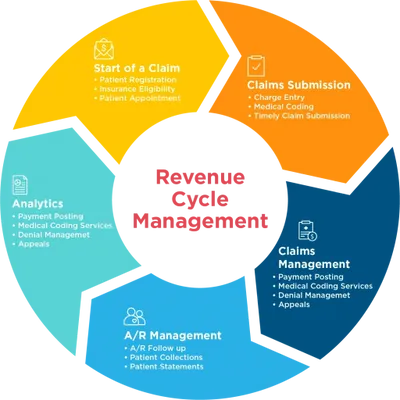
Revenue cycle management services address those gaps as one connected process. Instead of treating billing as a task that starts after the visit, an RCM team manages the financial side of care from the first patient contact through final payment.

That approach matters because an error at registration can cause a denial weeks later. A missed authorization can also delay treatment, reimbursement, and staff productivity.

revenue cycle management services

What are revenue cycle management services?

Revenue cycle management services are outsourced or managed functions that help healthcare providers bill correctly, collect payments, resolve denials, and track financial performance. They connect front-office work, clinical documentation, medical coding, payer transactions, patient billing, and accounts receivable.

The Healthcare Financial Management Association describes healthcare revenue cycle management as the work that tracks revenue from the patient’s first interaction through final payment. In a physician practice, each stage directly affects the next stage.

Scheduling creates patient and insurance data. Documentation supports coding. Coding supports the claim. The payer’s response then determines whether the practice receives payment or must take another action. HFMA’s revenue cycle management guide explains this end-to-end financial path.

A full-service RCM partner may manage these stages:

  • Patient registration, insurance eligibility, and benefit verification
  • Charge capture, ICD-10-CM, CPT, and HCPCS coding support
  • Claim submission, payment posting, denial appeals, and A/R follow-up
  • Patient statements, reporting, payer enrollment, and financial reconciliation

These functions should not operate as separate departments with limited communication. If eligibility staff miss a coverage change, the billing team may receive a denial. If the clinician leaves documentation incomplete, the coder may delay the claim or select a lower-supported code.

If no one tracks denial reasons by payer, the same error can repeat across dozens of claims. Revenue cycle management connects these events so the practice can fix the source of the problem instead of repeatedly correcting its financial result.

Why do healthcare providers need RCM support now?

Healthcare providers need RCM support because payer rules, staffing costs, prior authorization, patient responsibility, and electronic transaction requirements have made billing harder to manage with disconnected tools. A practice may submit more claims than last year and still collect less money if denials rise or follow-up slows.

The administrative cost becomes clear in prior authorization. The American Medical Association’s 2025 physician survey found that physicians completed about 40 prior authorizations each week and spent an average of 13 physician and staff hours on that work.

The same survey reported that 95% of physicians said prior authorization delayed necessary care. That workload affects clinical access and the revenue cycle because missing or late approvals can lead to rescheduled services, denied claims, and unpaid staff time.

Staffing pressure also changes the decision between building an internal team and hiring outside support. An MGMA poll found that 36% of medical practice leaders planned to outsource or automate part of revenue cycle management in 2025.

Practices often choose outside support when they cannot recruit experienced billers, keep up with payer changes, or give internal teams enough time for denial analysis and A/R recovery. MGMA’s discussion of outsourced and automated RCM connects this shift to staffing, analytics, and performance management.

RCM support does not replace clinical judgment or practice leadership. It gives the organization a defined operating system for financial work.

When staff know who owns each claim status, denial, appeal, underpayment, and patient balance, fewer accounts disappear into shared inboxes or old work queues.

How do revenue cycle management services improve cash flow?

Revenue cycle management services improve cash flow by shortening the time between the patient visit and correct payment. They do this through accurate front-end data, timely charge entry, clean claim submission, fast payer follow-up, and clear ownership of denied or unpaid accounts.

The first cash-flow gain often happens before a claim reaches the payer. Eligibility verification confirms active coverage and benefits. Authorization tracking confirms whether the payer requires approval. Accurate registration reduces demographic and subscriber errors.

When the practice completes these steps before care or claim submission, the billing team spends less time correcting avoidable problems later.

The second gain comes from faster claim movement. CMS explains that electronic claims pass through front-end edits, HIPAA format checks, and payer policy edits.

A batch can fail because of format errors, while an individual claim can face rejection or denial because of claim-level data or coverage rules. An RCM team reads each response, corrects the cause, and resubmits the claim within the payer’s filing limit. CMS’s electronic claims guidance describes these claim-edit stages.

The third gain comes from disciplined accounts receivable follow-up. Accounts receivable, or A/R, represents money the practice has billed but has not collected.

If a claim reaches 60, 90, or 120 days without action, collection becomes harder. RCM teams segment A/R by payer, age, balance, denial reason, and next action so staff work the highest-value and most time-sensitive claims first.

Which revenue cycle problems signal that a practice needs outside help?

A practice may need outside RCM help when its financial problems continue even after staff work longer hours. The strongest warning signs come from repeated delays, unclear ownership, rising rework, and weak reporting.

Common signs include:

  • Staff leave claims unsubmitted because charts or charges stay open for several days
  • Denials repeat because of eligibility, authorization, coding, or timely-filing errors
  • A growing share of insurance A/R moves beyond 90 days
  • Leaders cannot see clean claim rate, denial rate, net collection rate, or days in A/R

One bad month does not always justify outsourcing. A payer system change, provider absence, or EHR conversion can temporarily affect results.

The decision should depend on patterns. If the same denial category grows for three months, staff cannot keep up with payer follow-up, or leadership cannot trust the reports, the practice needs a process change.

Outside support may cover the entire revenue cycle or one weak area. A group may keep registration and patient collections in-house but outsource coding, claim submission, and denial management.

Another practice may use professional medical billing services while retaining its own billing manager for oversight. The right split depends on specialty, payer mix, claim volume, staff skills, and control preferences.

Which RCM metrics should healthcare providers track?

Healthcare providers should track a small set of metrics that show whether claims move quickly, accurately, and completely. A dashboard with dozens of numbers adds little value when leaders cannot connect each metric to an owner and action.

HFMA’s MAP Keys identify standard revenue cycle measures such as clean claim rate, denial rate, denial write-offs, cash collection, and A/R performance. HFMA’s MAP KPI framework gives providers common definitions, which helps leaders compare performance over time instead of changing formulas from one report to the next.

Clean claim rate measures the share of claims that pass initial edits without correction. A falling rate often points to registration, coding, claim setup, or payer-rule problems.

Initial denial rate shows how often payers deny claims on first review. Net collection rate compares collected revenue with the amount the practice could collect after contractual adjustments.

Days in A/R shows how long revenue remains unpaid. A/R over 90 days shows whether old balances are building. Cost to collect measures the staff, technology, vendor, and overhead costs required to bring in revenue.

No single number tells the full story, so leaders should review these measures together.

For example, a low denial rate may look positive, but it can hide undercoding if the practice avoids higher-level claims that the documentation supports. A high collection rate may also hide slow payment if days in A/R continues to rise.

Good RCM reporting connects speed, accuracy, financial yield, and collection cost.

How do revenue cycle management services reduce claim denials?

RCM services reduce claim denials by finding the root cause before the next claim repeats the same error. Denial management should not stop at appealing individual accounts. It should send lessons back into scheduling, authorization, documentation, coding, and claim edits.

HFMA has called for standard denial definitions because healthcare organizations often measure denials differently. Without a shared method, one department may count only formal payer denials while another includes claim rejections and requests for more information.

HFMA’s denial-metrics guidance recommends consistent measurement for benchmarking and process improvement.

An RCM team should group denials by payer, location, provider, code, reason, and financial value. If authorization denials rise for one payer, the team should review that payer’s rules and the practice’s pre-service workflow.

If coding denials cluster around one procedure, the team should compare documentation, coding rules, and claim edits.

Appeal strategy also matters. Some denied claims should not receive an appeal because the service lacks coverage or the filing limit has passed. Other accounts require corrected claims rather than formal appeals.

A skilled team chooses the correct path because sending every denial through the same workflow wastes time and can cause the practice to miss payer deadlines.

How do RCM services support HIPAA and electronic transactions?

RCM services support HIPAA by working within standard healthcare transaction rules and protecting electronic protected health information. The practice still holds responsibility for vendor oversight, contracts, access controls, and risk management.

CMS states that HIPAA transaction standards apply to health plans, clearinghouses, and healthcare providers that conduct covered electronic transactions.

These standards cover claims, eligibility, claim status, remittance, referrals, authorizations, and other financial or administrative exchanges. CMS’s transaction overview explains how these exchanges connect providers and payers.

The rules continue to change. CMS finalized national standards for electronic claims attachments and electronic signatures in March 2026.

The rule took effect on May 26, 2026, with compliance required by May 26, 2028. CMS projects about $781.98 million in annual industry savings because the standards replace many fax and mail workflows with structured electronic exchange.

CMS’s claims-attachment final rule gives healthcare providers a clear preparation timeline.

A practice should ask any RCM vendor how it manages user access, audit logs, data transmission, staff training, incident response, subcontractors, and business associate agreements.

Technology alone does not create compliance. Policies, contracts, access limits, and daily staff behavior protect patient data.

Should a practice outsource the full revenue cycle or only part of it?

A practice should outsource the full revenue cycle when several connected stages fail at once and internal leadership cannot rebuild them quickly. Partial outsourcing works better when the practice has strong control over some stages but lacks skill or capacity in one area.

Full outsourcing may cover scheduling support, eligibility, coding, claims, payment posting, denials, A/R, patient billing, and reporting. This model gives one team responsibility for the full financial path.

It can reduce handoff problems, but the practice still needs an internal leader who reviews reports, approves policies, and holds the vendor accountable.

Partial outsourcing gives the practice more control. A group may outsource old A/R, high-dollar denials, coding audits, or payer credentialing.

Provider enrollment problems can block claims before billing begins, so practices may connect RCM support with professional credentialing services.

The choice depends on the root problem. If the practice submits clean claims but cannot work old A/R, targeted recovery may solve the issue.

If registration errors, coding delays, denials, and reporting all show weakness, then end-to-end revenue cycle management services may create clearer ownership.

How should healthcare providers compare RCM companies?

Healthcare providers should compare RCM companies through real workflow evidence, contract details, reporting quality, and specialty experience. A low percentage fee means little if the vendor allows preventable denials or ignores old A/R.

Ask each vendor the same questions:

  • Which tasks will your team manage, and which tasks will stay with our staff?
  • How will you report clean claim rate, denials, A/R aging, collections, and underpayments?
  • Which EHRs, clearinghouses, specialties, and payer workflows does your team support?
  • How can we export data, end the contract, and transfer open accounts if we leave?

The vendor should define response times, reporting schedules, escalation paths, and performance measures in writing.

Ask who owns payer enrollment, authorization, coding questions, patient calls, refunds, credit balances, and appeal documentation. Undefined work creates gaps, and gaps create unpaid claims.

Also review the fee model. Percentage-based pricing aligns cost with collections but may exclude patient payments, old A/R, or special projects.

Flat fees create predictable costs but may not adjust well when volume changes. Per-claim pricing can work for stable volume, but the contract should state how rejected, corrected, and secondary claims count.

Frequently asked questions about revenue cycle management services

What do revenue cycle management services include?

Revenue cycle management services usually include eligibility checks, authorization tracking, charge entry, coding support, claim submission, payment posting, denial management, A/R follow-up, patient billing, and reporting. Some providers also include credentialing and contract support. The exact scope should appear in the service agreement because missing ownership creates delays between the practice and RCM team.

How much do revenue cycle management services cost?

RCM pricing often follows a percentage of collections, a flat monthly fee, a per-claim fee, or a mixed model. The right price depends on specialty, claim volume, payer mix, service scope, and A/R condition. Practices should compare total cost to collect, not just the quoted rate, because a cheap service can cost more through missed revenue.

How long does it take to see results from outsourced RCM?

Most practices can see early workflow changes within 30 to 60 days, but full financial results may take 90 to 180 days. The timeline depends on payer response times, existing A/R age, credentialing status, documentation quality, and data migration. A vendor should set separate goals for new claims, old A/R, and denial recovery.

Can RCM services work with an existing EHR?

Yes, RCM services can usually work with an existing EHR when the platform supports billing access, claim files, reports, and user permissions. The vendor should test charge flow, claim edits, payment posting, and document access before launch. If the EHR and billing workflow do not connect properly, staff may need to re-enter data and create new errors.

What is the difference between medical billing and RCM?

Medical billing focuses mainly on creating, submitting, and following claims. Revenue cycle management covers a wider process that starts with scheduling and eligibility and ends with payer and patient payment. Billing sits inside RCM. If front-end errors cause most denials, claim follow-up alone will not fix the source of the problem.

How can a practice measure an RCM vendor’s performance?

A practice should measure clean claim rate, initial denial rate, net collection rate, days in A/R, A/R over 90 days, payment-posting time, appeal results, and cost to collect. The practice should also review these metrics by payer and denial reason. Monthly totals alone can hide a serious problem with one insurer, specialty, or location.

Does outsourcing RCM remove the practice’s compliance responsibility?

No. Outsourcing transfers daily tasks, not the practice’s full compliance responsibility. The provider still needs vendor due diligence, a business associate agreement, access controls, policy review, and performance monitoring. Practice leaders should review user access and audit trails regularly because outside billing teams handle protected health and financial information.

What should your healthcare organization do next?

Start with a 90-day revenue cycle review before signing a long-term contract. Measure how quickly charges leave the EHR, how many claims pass on first submission, why claims get denied, how much A/R sits beyond 90 days, and how staff divide ownership.

Then match the service model to the problem. Choose targeted support when one stage fails but the rest of the cycle performs well. Choose broader RCM support when registration, coding, claims, denials, and reporting break across several connected stages.

The right revenue cycle management services partner should give your practice clearer data, faster action, and defined accountability. Do not accept promises about higher revenue without a baseline and written metrics.

Set goals for the first 30, 60, and 90 days. Review results by payer and denial cause, and adjust the workflow before small financial leaks become long-term losses.